


…His senate bid undermines party internal democracy- Imo APC Chieftain
…It’s ‘slight misunderstanding’, says Gov Sani
By Teddy Oscar Chukwugekwu
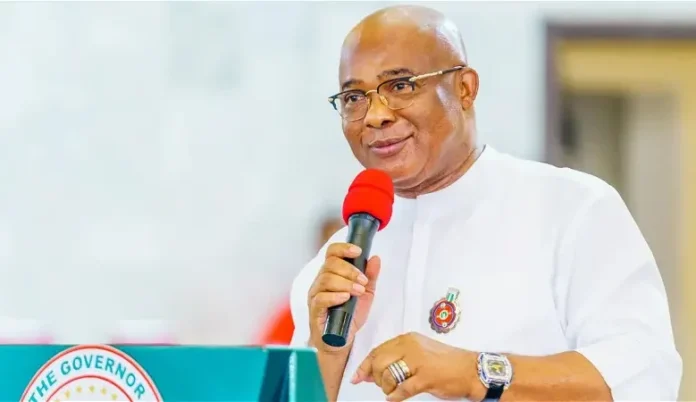
Imo State Governor Hope Uzodinma is once again at the centre of political controversy following allegations of a dispute over funds raised for President Bola Tinubu’s re-election campaign and reports that he is eyeing Senate seat while still in office.
The development has reignited debate over the governor’s leadership style, his controversial path to power and his influence in the ruling All Progressives Congress (APC).
Sources in the Progressive Governors Forum (PGF) said the forum raised billions of naira to support Tinubu’s 2027 re-election bid.
The funds were entrusted to Uzodinma, who chairs the PGF for coordination and disbursement.
However, it is alleged that the governor refused to render a full account of the money until after a disagreement emerged among forum members.
Party insiders claim Uzodinma has since paid part of the funds following pressure from colleagues but the exact amount and status of the balance remain unclear.
The allegation comes at a sensitive time as the APC begins early preparations for the 2027 elections and seeks to maintain cohesion among its governors.
Uzodinma’s latest troubles add to a tenure marked by political turbulence.
He assumed office in Jan. 2020 after a Supreme Court judgment nullified the election of Emeka Ihedioha of the Peoples Democratic Party (PDP) and declared him winner of the 2019 Imo governorship election.
The ruling triggered protests in Owerri and across the state, with many residents dubbing him the “Supreme Court Governor” and questioning the legitimacy of his mandate.
Since then, his administration has faced repeated clashes with opposition figures, labour unions and factions within the APC.
Critics argue that the manner of his emergence has shaped his approach to governance, while supporters say he has focused on infrastructure projects and security despite the state’s challenges.
The governor’s troubles have not been limited to Imo State. During the APC’s national congresses and convention process ahead of the 2027 elections, Uzodinma was initially named chairman of the party’s convention committee.
He was abruptly removed and replaced, a move insiders attributed to concerns over his conduct and handling of party affairs.
Party sources at the time said the leadership acted to avoid internal friction before the general elections.
The replacement was seen as an effort to restore confidence among APC stakeholders, particularly in the South-East.
Adding to the controversy are reports that Uzodinma is seeking to stand election for a Senate seat in 2027 while still serving as governor.
Imo State falls under off season election cycle. If Uzodinma wins a Senate seat in 2027, he will have to either resign as governor to enter the Red Chamber or hold two offices at the same time.
The move has sparked political uproar among politicians in Imo State, with some accusing him of trying to retain control of the state’s power structure even after his tenure ends.
Opposition figures and some APC members argue that the plan undermines internal democracy and could deepen divisions in the party in Imo.
Others contend that as a sitting governor, he has the right to go for any office provided he follows due process.
The ambition, if confirmed, would mirror a growing trend among outgoing governors seeking to transition to the Senate.
At least nine second-term governors across the country are reported to be preparing for senatorial bids in 2027.
The current disputes fit into what analysts describe as a pattern of controversies surrounding Uzodinma’s political career.
From legal battles to party conflicts, his time in office has rarely been free of tension.
“He is a politician who thrives in high-stakes situations, but that also means he is often at the centre of disputes,” said a political analyst in Abuja, Mr Jimoh Ali.
“The question now is whether these issues will affect his standing in the APC and his role in the 2027 campaign structure,” Ali noted.
The APC has not commented publicly on the allegations.
However, Governor Uba Sani of Kaduna State said there is no leadership crisis in PGF insisting that Uzodimma remains the chairman of the forum.
Sani who is the Vice Chairman of the forum said the disagreement was only a “slight misunderstanding” that had been resolved.
Speaking on Channels Television’s “Politics Today” programme on Monday, the Kaduna State governor denied that Uzodimma had been removed as chairman of PGF and replaced by Governor Peter Mbah of Enugu State.
Reports had suggested that the forum had split into rival camps, with one faction backing Uzodimma, another said to be aligned with Governors Dapo Abiodun of Ogun State and Abdulrahman Abdulrazaq of Kwara State.
The development sparked speculation over possible divisions within the APC governors’ bloc, with President Bola Tinubu reportedly intervening to calm tensions among party stakeholders.
However, Sani said there was no leadership change in the forum and maintained that all governors had reunited.
“In my own opinion, I don’t think it’s a serious issue, like many people try to make it look like it’s a very serious issue,” he said.
Party officials say the focus remains on consolidating support for Tinubu’s re-election and ensuring unity in the PGF.
Uzodinma’s position as chairman of the PGF places him in a key role in mobilising APC governors for the 2027 election.
A lingering dispute over funds could weaken his influence and create divisions at a time when the party is seeking unity.
His reported Senate ambition also raises questions about power transition in Imo State. With the governorship election due in 2027, political calculations in the state are already shifting, and the governor’s next move could determine the direction of the APC in Imo.
The latest controversies have once again brought the question of Uzodinma’s leadership to the fore.
To his supporters, he is a strategic operator who delivers results in difficult political terrain. To his critics, he represents a style of politics defined by confrontation and opacity.
“What manner of governor is Uzodinma?” remains the question many in Imo and within the APC are asking.
With 2027 approaching, how he handles these crises may determine whether he retains his influence at the national level or becomes a liability for the party’s campaign.
For now, the governor has not made a public statement on the allegations or his political plans. But the coming months will show whether the issues fade into another chapter of Imo’s turbulent politics or develop into a larger problem for the APC ahead of the general elections.