

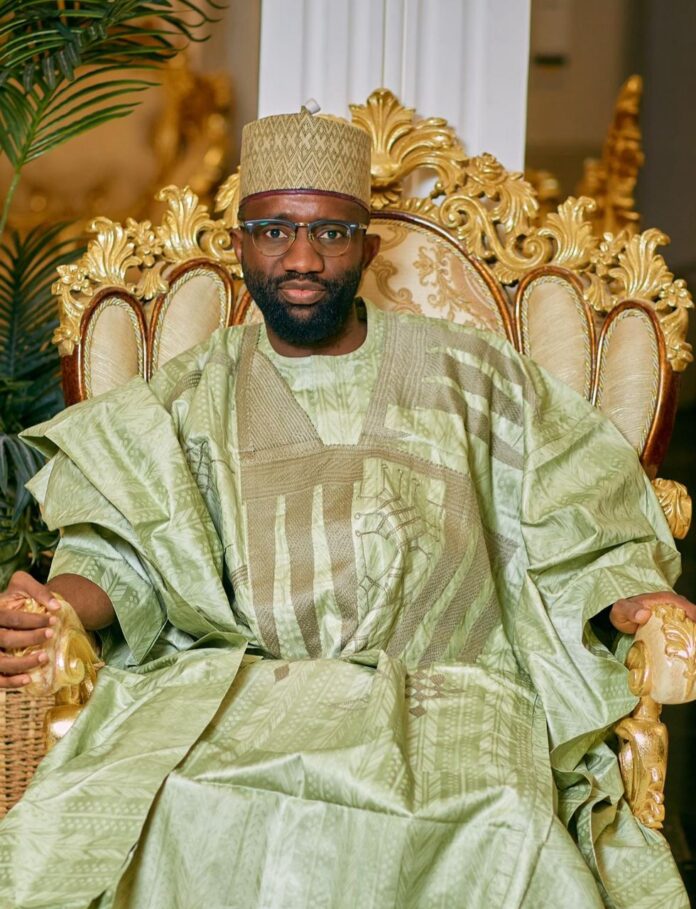

The recent political developments in Gombe State surrounding the governorship aspiration of Professor Isa Ali Ibrahim Pantami have opened a very important conversation, not only about politics, but also about leadership, justice, democracy, and Islamic principles in governance.
In a recent BBC Hausa interview, Professor Pantami openly rejected the so-called consensus arrangement that reportedly produced another aspirant as the preferred candidate of the ruling APC in Gombe State. According to him, what happened cannot genuinely be described as “consensus” because all stakeholders and aspirants were neither properly consulted nor did they collectively agree. He insisted that if true consensus fails, then direct primaries should be conducted in line with party rules and the Electoral Act.
To many observers, this may appear like an ordinary political disagreement. However, beyond politics, the issue raises deeper questions about justice, obedience to leadership, consultation (shūrā), and the moral foundation of leadership in Islam.
Personally, I have never been among those encouraging Professor Pantami to venture deeply into partisan politics. Religious scholars occupy a sensitive and respected position in society. Their moral authority is often stronger when they remain above political battles. Politics in Nigeria is filled with compromises, alliances, manipulations, and interests that can gradually consume even respected scholars.
However, now that Professor Pantami has entered the political arena, his current experience may provide an important lesson both for himself and for many Islamic scholars who discuss democracy theoretically without fully experiencing its practical realities.
One striking aspect of his BBC Hausa interview was his insistence that he would not remain silent in the face of injustice. He emphasized that leadership decisions must follow justice and due process, and that where injustice exists, it must be challenged legally and morally.
This position is very significant because in many Islamic teachings, Muslims are encouraged to obey leaders, maintain unity, and avoid chaos. Yet Islam also strongly emphasizes justice. Obedience is not absolute when injustice becomes institutionalized. Scholars throughout Islamic history have debated the balance between obedience to authority and standing against oppression.
The situation in Gombe therefore exposes a major contradiction in Nigerian democracy. While democracy speaks about participation, fairness, primaries, and the will of the people, the practical reality in Nigeria often revolves around political godfatherism, endorsements, imposition, and elite arrangements. In many cases, party structures become tools controlled by powerful individuals rather than mechanisms of collective political participation.
Ironically, Professor Pantami is now publicly arguing for principles that many ordinary politicians rarely defend strongly: fairness, transparent process, consultation, and genuine participation. Whether one supports his ambition or not, his current arguments are exposing weaknesses within the political system itself.
Another important lesson from this episode is that Islamic political ideals cannot simply be reduced to slogans. Concepts such as shūrā (consultation), justice (‘adl), trust (amānah), accountability, and fairness are not mere religious decorations. They require institutions, sincerity, and moral discipline to function properly. Without these, democracy easily becomes a competition of influence rather than a system of justice.
The debate is therefore no longer only about who becomes governor in Gombe State. It has now become part of a larger national discussion: can Nigerian democracy truly accommodate justice, fairness, and moral leadership? Or has politics become merely a struggle for power controlled by a few influential actors?
Professor Pantami’s political experience may eventually serve as a practical case study for Islamic scholars and political thinkers in Nigeria. It demonstrates that once a scholar enters partisan politics, he is no longer speaking from theory alone; he begins to confront the realities of power, interests, alliances, manipulation, and institutional injustice firsthand.
Perhaps this moment will help deepen the conversation about the relationship between Islam and democracy in Nigeria — not merely as abstract theory, but as lived political reality.
Whether one agrees with Pantami politically or not, one thing is clear: the current events in Gombe State have reopened an important debate about justice, leadership, consultation, and the true meaning of democracy in Nigeria.
Article by Nafiu Danladi Sankara PhD.