


STRAIGHT TALK BY OBINNA F NWACHUKWU
Since the beginning of this year, Nigeria has been under a frenzy situation because it is a pre-election year and pre-election years are particularly significant because all the relevant stakeholders—politicians, the Independent National Electoral Commission ( INEC), and the voters— gear up ahead of the forthcoming polls, as people and resources begin to fall into place.
Indeed, as politicians scramble to secure their positions, we are beginning to witness defections across party lines. This is especially notable in the light of the ongoing rift between some governors and their subjects and between party leaders and party members. The initial trend of defections to the ruling party, the All Progressives Congress (APC) raised fears that the country was trending towards a one-party system of governance.
However, defections by politicians such as Peter Obi, Atiku Abubakar, Rabiu Musa Kwankwaso, Seriake Dickson, David Mark, Rotimi Amaechi, Nasir el’Rufai, amongst others, have doused the fear of a one party state and set the scene for an interesting contest for the office of the president.
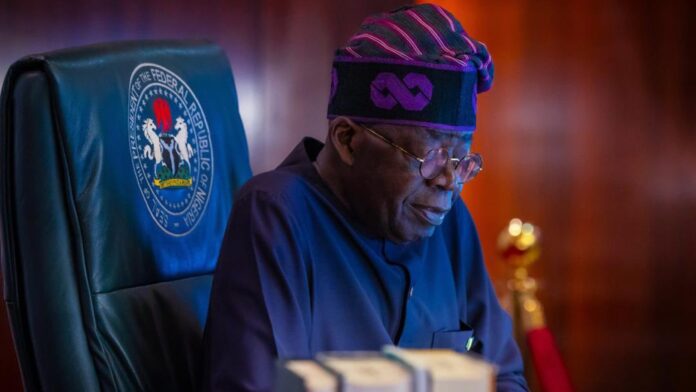
But one important question in the minds of well-meaning Nigerian as the 2027 polls draw nearer is whether Nigerians would want to return President Bola Ahmed Tinubu elected for the second term or see other aspirants as genuine alternatives to the incumbent president
Last week, the tempo of political activities increased with the race for the 2027 Nigerian presidency taking a clearer shape. President Bola Tinubu took steps toward a second term bid by submitting his nomination forms. Also, the newly formed political party, the Nigerian Democratic Congress ( NDC) held its convention and elected former Anambra State governor Peter Obi as its 2027 presidential candidate with former Kano state governor, Dr. Rabiu Musa Kwankwaso as his running mate. This happened less than one week after the duo decamped from the African Democratic Congress (ADC) to the NDC
In a related development, the Social Democratic Party, adopted Dr. Adewole Adebayo as its Presidential Candidate. He contested in 2023 but failed. Nigerians are expecting the Labour Party and ADC to soon announce their candidates before the expiration of the INEC deadline. Former president Dr. Goodluck Ebele Jonathan is equally rumoured to be eying the seat he vacated in 2015. Last week, several youths from across the country gathered at his Maitama Abuja office urging the former president to contest again, to which he noted he would “consult widely”. Also, various figures in the political landscape often emerge as candidates through smaller parties, including past consistent contenders like Pastor Chris Okotie.
A Nigerian president is expected to be a charismatic, visionary leader with strong integrity, economic acumen, and a commitment to uniting the country. Key requirements include being a Nigerian citizen by birth, at least 35 years old (as of 2027), educated to a school certificate level, and a member of a political party.
For the upcoming election, Nigerians expect the focus areas for 2027 candidates to include:
• Visionary & Strategic Thinking: Ability to plan for the future, understand the complexities of Nigeria, and possess a development-driven agenda.
• Integrity & Character: A proven, incorruptible character who is respectful, humble, and strong
• Courage & Firmness: A brave, “lion-like” leader who can confront security challenges, such as banditry and terrorism, without being cowardly.
• Inclusivity & National Unity: Ability to foster unity across tribal and religious lines, prioritizing the common good over partisan interests.
• Economic Competence: A “pro-business” mindset capable of addressing economic growth, reducing poverty, and fostering industrialization.
• Good Health & Stamina: Physical and mental fitness to handle the rigorous demands of leadership.
• Respect for Rule of Law: Upholding the constitution and respecting the separation of powers between the executive, legislature, and judiciary.
• Proactive & Empathetic: Possessing emotional intelligence to understand the hardships of citizens and acting with empathy.
• Economic Acumen: A pro-business mindset capable of strengthening the economy and fostering a conducive environment for Micro, Small, and Medium Enterprises (MSMEs).
• Respect for Rule of Law: Upholding the constitution and respecting the separation of powers between the executive, legislature, and judiciary.
• Mentorship and Team Building: Ability to work with and build a team of high-performing individuals, not just allies.
A qualified Nigerian president should possess a blend of transformative vision, high integrity, and proven crisis management skills, alongside a deep understanding of the country’s economic and security challenges. Key expectations include a commitment to national unity, adherence to the rule of law, and a track record of public service.
Suffice it to say that, across the world, citizens and commentators often prioritize a leader who is not just a politician but a “solver” of the nation’s infrastructural and social shortcomings. Hence, there is a strong call for patriotic leaders with immense bravery and intellectual capability. The need for a “Pro-Business” and “Pro-Growth” leader is a key expectation as Nigerians go into the general election.
The current Tinubu administration initiated bold reforms, including the removal of fuel subsidies. A recent GDP rebasing exercise and an FX liberalisation policy, which saw the CBN abandon its previous policy of spending to keep the naira afloat. In addition, the Tax Reform Act, whose implementation has faced significant criticism, forms part of the President’s reforms. Yet, despite these efforts, the cost of living remains high for the average Nigerian. In 2026, Nigerians hope that most of these shocks will have eased and life will become easier for them. Ahead of the polls in 2027, the economy will be a major consideration for Nigerians.
In addition, insecurity has been a perennial issue in Nigeria over the years as successive administrations have failed to decisively deal with the issue. This has only seen the situation get worse over the years, leading to mass kidnappings, killings, and other such incidents of the breakdown of law and order. In 2025, there was a new actor in Nigeria’s fight against insecurity— The United States under President Trump, who designated Nigeria a ‘Country of Particular Concern’ over the attacks on several Christian communities in the Middle Belt and other parts of the North. This culminated in an air strike by the U.S and a new partnership that sees the U.S assisting the Nigerian Government with intelligence and other military hardware in the fight against insecurity in the country.
In 2026, the effects of this alliance will become clear, whether it effectively combats terrorism in Nigeria’s North or if it will be another short-lived attempt that has no lasting effect on insecurity in the country.
Far and above all other considerations for the 2027 general elections, Nigerians will be watching the Independent National Electoral Commission (INEC) as it prepares for those elections, particularly how it handles the off-cycle elections that are to hold this year in Ekiti and Osun states. It would be a good opportunity for INEC to win back the trust of Nigerians.
USE FOR QUOTE
Far and above all other considerations for the 2027 general elections, Nigerians will be watching the Independent National Electoral Commission (INEC) as it prepares for those elections, particularly how it handles the off-cycle elections that are to hold this year in Ekiti and Osun states