


By Ben Ogbemudia
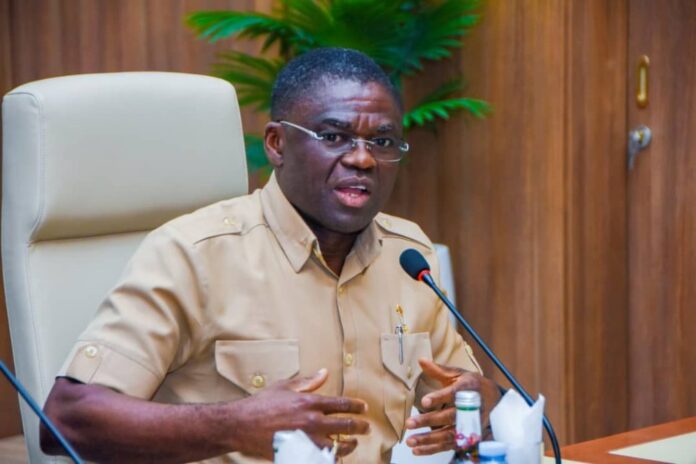
The Director General and Chief Executive Officer of the National Institute for Sports (NIS), H.E. Comrade Philip Shaibu, has renewed calls for stronger collaboration among government agencies in the sports sector, stressing that synergy remains critical to unlocking Nigeria’s full potential in sports development.
Shaibu made this known during a media interactive session along with the Institute’s Medical Director, Dr. Sam Ogbondeminu, who has recently made history as Nigeria’s first certified marathon race medical director after completing a rigorous international certification process in Spain.
Speaking at the interactive session, the DG emphasized that inter-governmental collaboration is not just desirable but necessary, citing practical examples of how partnerships can drive results. He particularly appreciated the Federal Ministry of Foreign Affairs, and Lady Bianca Ojukwu, for their intervention in facilitating visa arrangements that enabled participation in the certification programme in Spain.
According to him, “This is why collaboration among government institutions is essential. Without that support, this milestone may not have been possible.”
The NIS Boss, however, expressed concern over the lack of institutional support from key agencies within the sports ecosystem. He noted that the NIS has largely relied on internal efforts and private partnerships to sustain its programmes, despite its central role in sports development.
He explained that while the National Sports Commission (NSC), the Nigeria Football Federation (NFF), and the NIS are the three major sports parastatals in the country, their functions must be better aligned for optimal performance. While the NFF focuses on football and the NSC oversees general sports administration, the NIS, he said, remains the nation’s specialized institution responsible for the training and certification of athletes across various disciplines.
“The NIS is not just an academic institution; it is both academic and professional. We train, certify, and build capacity for athletes and sports personnel. That role must be fully recognized and integrated into national sports planning,” he stated.
The DG disclosed that since assuming office, efforts to convene formal engagements with the NSC and NFF have yet to fully materialize, despite repeated attempts. He, however, expressed optimism, noting a recent breakthrough in collaboration with the NFF, particularly in aligning NIS programmes with CAF B coaching certification standards.
“Our technical teams are already working. We want to see NIS certification align with CAF B standards, so that our graduates remain competitive globally,” he added.
Shaibu also highlighted progress made with the Nigerian Education Loan Fund (NELFUND), revealing that arrangements are underway to support financially challenged students of the Institute through the student loan scheme, ensuring they complete their training.
He reiterated that all government agencies operate within a unified system and must function as one, regardless of administrative bottlenecks. “I understand the system, but I will continue to push until collaboration works. We have all been entrusted with responsibilities under the Renewed Hope Agenda of President Bola Ahmed Tinubu, and we must deliver.”
The DG noted the strategic importance of sports in national development, noting that the President’s vision to use sports as a vehicle for unity, youth engagement, and economic diversification can only be achieved through coordinated efforts. He stressed that engaging young people productively through sports would significantly reduce idleness and insecurity.
Highlighting the significance of Dr. Sam’s achievement, Shaibu described it as a major milestone for Nigeria’s sports medicine landscape. He lamented that in the past, the country had to rely on foreign expertise for such roles, but expressed confidence that this new development marks the beginning of self-sufficiency.
“I am a team player, and my goal is simple, to ensure that the system works. When it fails, we must take responsibility, not shift it. At the NIS, we have started the work, and very soon, we will begin to see even greater results,” he said.
In his remarks, Dr. Sam Ogbondeminu recounted the journey to his certification, revealing that the opportunity began when the DG encouraged him to apply as medical director for the Okpekpe International Road Race. He explained that meeting the requirements necessitated undergoing a three-stage certification programme in Madrid.
According to him, the process was demanding and, at a point, nearly derailed due to logistical challenges. However, support from the Okpekpe race organizers and the intervention of the Ministry of Foreign Affairs ensured that he was able to complete the programme successfully.
With this achievement, Nigeria now boasts a certified marathon medical director, a development expected to strengthen the country’s capacity to host and manage international road races with improved medical standards.
The meeting underscored a broader message, Nigeria’s sports sector stands at a turning point, where collaboration, innovation, and commitment will determine how far and how fast the nation can go.