


Valentine Obienyem
Why is it that whenever issues arise, especially those touching on the Igbo people, it is often fellow Igbos who are deployed to oppose or undermine one of their own? Even at the town level, when someone is perceived as a threat to entrenched interests and targeted for a knock-out blow, it is usually his own townsmen who are mobilized against him. Take Mr. Peter Obi as an example: within his own town of Agulu, individuals such as Francis Anajemba are used by the opposition to attack him. Now that some of them seek recognition within the City group, their attacks have only become magnified. Must one seek personal advancement on the ashes of a brother, even when the injustice is clear?
For Nigeria to thrive in unity and achieve meaningful progress, every group must be treated fairly and given a genuine sense of belonging. Can we honestly say this is the case under the present administration? Many observers have noted a pattern of appointments that provocatively favour certain regions or affiliations. Is any Igbo person occupying a truly strategic national security position today? The question we should be asking is whether this is by design or by accident. Yet, despite this visible imbalances, some continue to rationalize it.
I have always maintained that almost nothing is beyond rationalization. I often recount the story of how Julius Caesar once received the Roman senators sitting rather than standing. When critics murmured about his apparent indolence, he explained that it was due to a stomach upset – rising to stand at that inopportune moment could have caused an embarrassing movement of his bowel. In Nigeria, many riders abound to be used for rationalisation of acts that defy reason.
If not for the patience – or perhaps the resignation – of many Nigerians, such lopsidedness could have provoked serious unrest. History offers clear lessons: we need only examine the factors that caused the Tamil insurgency, the Darfur crisis, and the Biafra struggle. It even fueled the Oduduwa agitation during the tenure of former President Buhari. Is what we see today merely a case of a student surpassing the instructions of his teacher? These events are all instructive specimens in the laboratory of history from which we can learn.
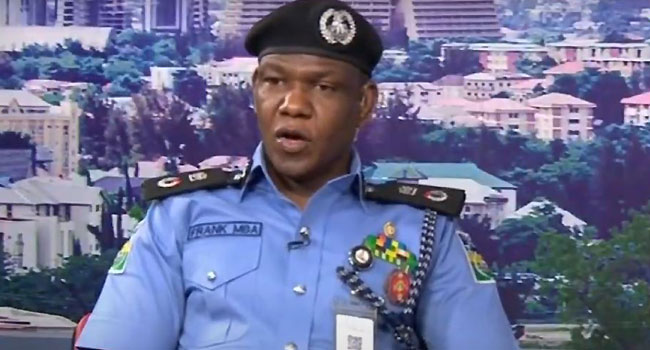
Consider the current debate surrounding one of the finest police officers the country has known: Frank Mba. It is worrisome that some Igbo voices are being used to defend decisions taken against him. Many others, like Francis Anajemba, remain ready to be deployed against their own kinsmen.
One argument suggests that Mba should simply be grateful to the force that gave him opportunities and quietly move on. That reasoning is valid only if we discuss Frank Mba purely as an individual. But the issue goes far beyond him. He has become a symbol, almost a metaphor, for larger questions about fairness, inclusion, and institutional justice in Nigeria. He has prompted critical questions: if it were a Yoruba man in his position, would he have been treated so cavalierly? Why was the tenure of Egbetokun extended in the first place? What strategic rationale exists for appointing Disu, who has less than two months to retire, with a possible tenure extension?
General of Police or head any of the country’s strategic military or security institutions, and under which administrations did this occur? If it is due to a dearth of Igbo officers, then we should ask what happens during the recruitment processes. Current patterns raise serious concerns about whether there is an unspoken reluctance to entrust Igbos with leadership of key national agencies, provoking broader questions about fairness and whether officers from certain regions are systematically sidelined in the distribution of sensitive positions.
Arguments that Mba was younger or joined the force later than others are largely beside the point. In disciplined services worldwide, seniority is determined by rank and professional standing – not merely by age or year of entry.
Ultimately, this conversation should not be reduced to one man. It should compel us to reflect honestly on the nature of our federation and whether every Nigerian truly enjoys equal opportunity.
What is happening far exceeds Frank’s personal journey – it is about national unity, fairness, and the assurance that justice and equity prevail in our institutions. When these principles are absent, we are quietly undermining the country, even as we pretend to uphold order and progress. The focus must shift from individuals to the systemic patterns that determine who has access to power and who is consistently excluded, for these patterns will ultimately define the health, cohesion, and future of Nigeria