

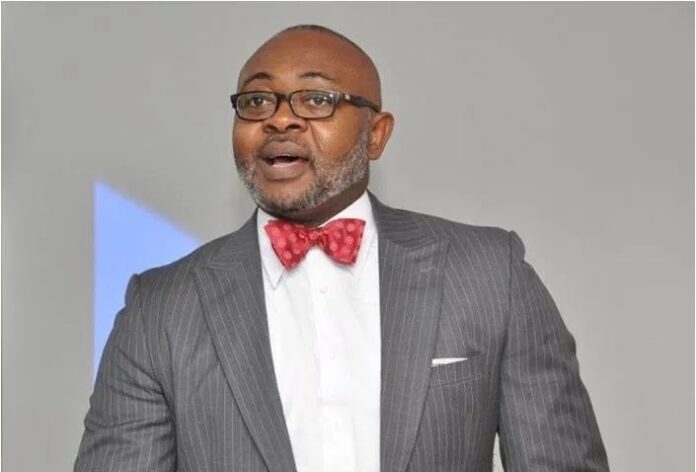

I was taken aback when I read what Mr. Emeka Amadioha Mbaisi Opara posted on his wall. His initial post, followed by responses to comments, focused squarely on Mr. Peter Obi and those who support him. I invite readers to consider his words carefully:
“When all your supporters do is insult other parties and politicians and insult their supporters, I wonder how you want to magically win your party’s ticket, much less win the election. Another pipe dream in the making!”
“PO will NOT be president.
These ethnic folks need to be told clearly.”
“And the chap knows he will NEVER be a senator, much less President. It’s imPOssible.”
“He will NOT be president.
He can demystify Amadioha for all I care, but it will never happen. Period.”
On Insults and Political Support
On the issue of insults, it must be objectively admitted that supporters of all political parties abuse one another. One of the core purposes of political education is to make clear that abuse does not win arguments; it merely creates enemies.
The perception that Peter Obi’s supporters are more abusive likely stems from the organic nature of their movement. These are citizens who are justifiably angry at the impunity, hardship, and systemic failures that define daily life in Nigeria. When they feel unheard, as is often the case, their frustration spills over toward those they perceive as defenders or beneficiaries of the status quo. Their voices are persistent, consistent, and growing in proportion to worsening economic conditions.
Crucially, Obi neither knows most of these supporters personally nor funds them. They are driven by conviction, not patronage. Like all human movements, theirs includes extremists, but that does not define the whole.
By contrast, many supporters from other political camps operate on transactional loyalty. Their activism is loud when money flows and silent when it dries up. Lacking deep belief in the candidates they promote, they require constant lubrication to remain visible. This difference—organic conviction versus paid enthusiasm—is fundamental.
On the Claim That Obi Will Never Be President
The repeated assertion that Peter Obi “will not be president” is not an argument; it is a proclamation. In politics, such declarations are dangerous. If Obi is unfit, then who, exactly, is fit to lead Nigeria?
This line of thinking echoes a familiar contradiction: the claim that Igbo people must perpetually “plan” to produce a president, while the same voices mobilize energetically for the ambitions of others. Was Peter Obi born a president? Has he ever claimed that he must be president at all costs? Are other Nigerians not equally qualified?
Since Aso Rock was completed, has it never troubled us that no Igbo man has occupied it? How many years have others held power? If Peter Obi, the most viable Igbo political figure of his time, is dismissed as “impossible,” then when, precisely, should an Igbo person aspire to the presidency? Perhaps not in our lifetime?
Even more perplexing is the reality that several South-East governors who openly antagonize Obi are already positioning themselves to become vice-presidential candidates to northern politicians in 2031. This contradiction leaves one scratching one’s head in perplexity’.”
On Truth, Elections, and Ethnicity
Those who insist that Obi will never be president are not being truthful with themselves. It is widely acknowledged that Obi won the 2023 election. Have those making such assertions ever demanded that INEC explain the glitches that marred the process? We should not hide behind a Supreme Court judgment when the rot in Nigeria’s institutions is common knowledge.
Most disturbing, however, is the reference to Obi’s supporters as “these ethnic folks.” The candor and audacity of that phrase are alarming. Obi’s supporters cut across ethnic, religious, and regional lines. If the remark was directed at Igbos, then it is deeply unfortunate. Igbos are arguably the most liberal and least ethnocentric group in Nigeria – this is hardly debatable.
That such an Igbo-phobic sentiment would come from one of their own only deepens the tragedy. Can Emeka look at Federal appointments by Tinubu and express happiness with him if not for other considerations? I think this viewpoint demands the taming of fratricidal tendencies. Must you kill your brother?
We may debate Peter Obi’s politics, views, or ambitions, but we cannot deny the sincerity of his supporters or the legitimacy of their aspirations. To dismiss them with contempt is not political analysis; it is an evasion of uncomfortable truths.