

By Nasir Aminu
Financial experts will tell you that if you cannot control your finances, you cannot control anything around you. This is more so when it comes to running a country.
Frustratingly, the administrators of the Tinubu administration have pushed sound fiscal planning to the bottom of their priority list. I say so because this government holds the record of running several budgets simultaneously.
At one point, up to four budgets—2023 main, 2023 supplementary, 2024 main, and 2024 supplementary—were effectively overlapping. Delays and extensions of the 2023 and 2024 budgets, including supplementary allocations, have meant that several fiscal instruments were technically running concurrently. In 2025, the capital component of the 2024 budget—originally meant to end in December 2024—was extended into 2025, first to June and then to December 31, 2025. At the same time, the N54.99 trillion 2025 Appropriation Act was passed and is in effect. Officials in the Budget Office have even stated that, at times, three budget instruments—including the 2024 main, 2024 supplementary, and the 2025 Act—have been running concurrently this year.
Critics have argued against this practice—despite its legality—because it reflects poor fiscal discipline. Running different budgets creates fiscal confusion and delays implementation. Of course, it helps the government avoid accountability, which, if that is the intent, favours corrupt practices.
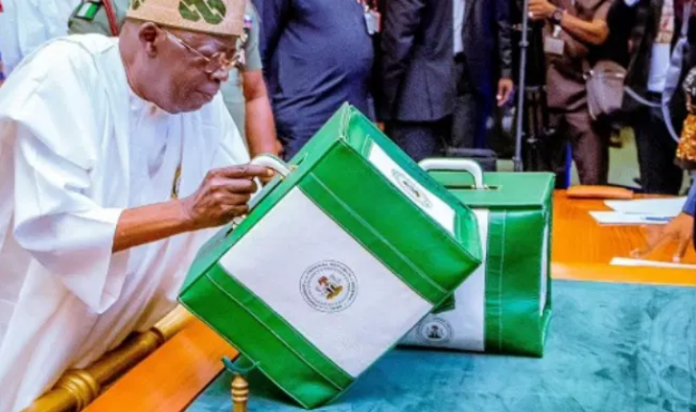
And as businesses and households await the 2026 budget announcement, some speculation is circulating that the 2025 capital budget may also be rolled into 2026. Now, this is a problem critics have dreaded all along. Adopting such a practice—running simultaneous budgets—will become standard in our conduct of fiscal policy.
Yes, we are aware that the federal government has instructed all MDAs to roll over 70 per cent of their 2025 capital budgets into 2026. The justification is to complete existing projects and control spending demands caused by weak revenues. There are two things to pick out here.
One, the administrators of this government are only consistent in being inconsistent. They hardly follow up on what they say. As stated above, this government has made a habit of running simultaneous budgets despite speaking against them. It will be difficult for that to happen, and saying so reduces Nigerians’ confidence in them.
Two, the government has no right to claim Nigeria is facing weak revenues. A State House statement by Tinubu on September 2 reported that his government had met the 2025 revenue target since August. He even added that the bulk of the revenue came from the non-oil sector. So, why is the federal government asking MDAs to be cautious of weak revenues?
These kinds of statements make the government lose credibility in the eyes of the people and institutions that trade with us and lend us money. They need to see a positive signal from the country.
Just last month, in the build-up to the UK Autumn Budget, something similar happened. The Chancellor of the Exchequer, Rachel Reeves, repeatedly signalled there would be “tough choices” and fiscal tightening. Her statements created market speculation. Investors dislike guessing. The British pound lost value in the forex market due to uncertainty. Traders priced the risk instead of waiting for the policy. But Keynes made the point long ago, ‘When the future is unclear, markets do not wait for facts; they act on fear and guesswork.’
A similar thing is happening to the Naira, too, following last week’s announcement of the intended muddled budget. CBN had to make an audacious move to stabilise the Naira by selling $150 million to banks in the forex market. Again, this is self-inflicted. Most of the time, saying nothing is better than announcing a policy that is doubtful.
The 2026 budget is the last full, 12-month budget for this administration. It is the budget that is expected to represent all special interests as the 2027 campaign goes into full speed. We will wait to see who gets what. As things stand, all expenditures are termed as misplaced priorities. They are also predominantly lopsided in favour of Lagos. One example is the construction of a new headquarters for the Bank of Industry in Eko Atlantic City. They have one already in Abuja. This is why critics are confident that this administration cannot do anything different from what it has been doing.
After all, past behaviour is the best predictor of future behaviour.
Between June 2023 and mid-2025, Nigeria’s public debt rose from N87.38 trillion to N152.39 trillion, an increase of about 74 per cent. The debt is driven by borrowing to finance budget deficits and by the depreciation of the Naira. Clearly, the debt has made government spending difficult. Debt servicing consumes a large share of government revenue, which is 26 per cent of the 2025 budget.
Surely, debt servicing leaves less room for capital investment and other development spending. A good example is the 2025 budget. The government can spend only 13 per cent of the 2025 budget on capital projects, even though it initially budgeted N23.96 trillion—43.6 per cent of the total. Funny how no one is asking about the visibility of these capital projects that run in trillions. As stated above, they now want the remaining allocation, 70 per cent, to be moved to 2026. But how will it be financed? By borrowing? If so, have they considered the cost of debt servicing in the 2026 budget? If only they would come clean without confusing us more.
It will be much easier to know the true state of the Nigerian economy while they are in government than to allow Tinubu’s successor to disclose it after the government has departed. Yes, he succeeded in accusing his predecessor of betraying Nigerians for leaving the economy weaker than many had thought. Yet, it is doubtful he would tolerate others doing the same to him, particularly after misleading citizens by projecting a harsh fiscal policy that he may not fully implement.