


By Milcah Tanimu
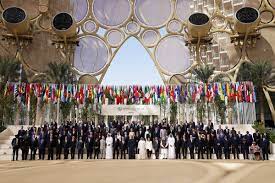
Global leaders, including Britain’s King Charles III, Indian Prime Minister Narendra Modi, and French President Emmanuel Macron, convened in Dubai for the COP28 conference, where urgent discussions on climate action took center stage. The conference, hosted by UAE President Sheikh Mohammed bin Zayed Al Nahyan, commenced with the establishment of a “loss and damage” fund to aid vulnerable nations affected by natural disasters.
The two-week summit faces critical negotiations on various climate-related issues, with a primary focus on the future of oil, gas, and coal. The initial draft of the agreement addresses a “phasedown/out” of fossil fuels, a crucial aspect given their significant contribution to greenhouse gas emissions. The heightened sense of urgency stems from a UN warning that 2023 is on track to become the hottest year on record, raising concerns about meeting the 1.5-degree Celsius warming limit.
Sultan Al Jaber, COP28 president and head of UAE’s national oil firm ADNOC, emphasized the importance of including the “role of fossil fuels” in climate talks. The draft text introduces a clash between those advocating for a “phaseout” and those supporting a less drastic “phasedown” of fossil fuels.
Over 140 world leaders, including Israeli President Isaac Herzog, are set to address delegates in the coming days. The conference’s agenda is not limited to climate issues, as the Israel-Hamas conflict also casts a shadow over the summit. Herzog seeks diplomatic support for the release of hostages held by Hamas, engaging with his Emirati counterpart and other leaders.
As the COP28 unfolds, it remains a critical platform for addressing climate challenges while navigating complex geopolitical realities. The global community anticipates tangible results and actions to combat climate change and promote sustainable practices.