
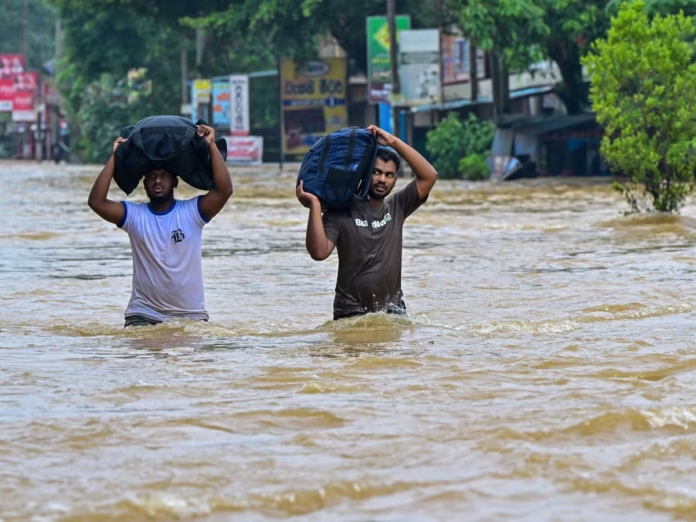

Large parts of Sri Lanka’s capital were submerged on Sunday after Cyclone Ditwah unleashed days of heavy rain, mudslides and rising river levels across the island, leaving almost 200 people dead and hundreds more missing.
The Disaster Management Centre said 193 deaths had been confirmed after a week of relentless rainfall, with 228 people still unaccounted for. Authorities warned that the scale of destruction in the central region was only becoming clear as crews cleared blocked roads and landslides.
Colombo’s northern districts saw extensive flooding when the Kelani River rose sharply.
“Although the cyclone has left us, heavy rains upstream are now flooding low-lying areas along the banks of the Kelani River,” an official said.
Residents waded through waist-deep water carrying whatever they could salvage. Selvi, 46, from Wennawatte, said she had abandoned her home with four bags of clothes and valuables. “My house is completely flooded. I don’t know where to go, but I hope there is some safe shelter where I can take my family,” she told AFP.
In Manampitiya, about 250 kilometres from Colombo, waters began to recede, revealing what locals described as unprecedented damage. “Manampitiya is a flood-prone town, but I have never seen such a volume of water,” said 72-year-old resident S. Sivanandan, who reported severe losses to businesses and property.
Despite the high death toll, authorities said injuries were relatively few. Even so, the National Blood Transfusion Service reported a severe shortage. Blood bank chief Lakshman Edirisinghe said the daily requirement was about 1,500 units, but weather disruptions cut Saturday’s collection to just 236. He urged donors to visit nearby blood banks as mobile collection drives had been halted.
The National Building Research Organisation warned of a continued risk of landslides because hillsides remained saturated.
President Anura Kumara Dissanayake declared a state of emergency on Saturday and appealed for international assistance. India responded first, sending relief supplies and helicopters for rescue missions, with more aircraft expected. Pakistan dispatched rescue teams, and Japan announced it would send an assessment team and pledged additional support.
Authorities said the cyclone destroyed more than 25,000 homes and forced 147,000 people into state-run shelters. Another 968,000 needed aid after being displaced by the floods.
Troops from the army, navy and air force joined civilian workers and volunteers in the nationwide rescue and relief effort.
Cyclone Ditwah is now the country’s deadliest natural disaster since 2017, when floods and landslides killed more than 200 people. The worst flooding in modern times occurred in 2003, when 254 lives were lost.