

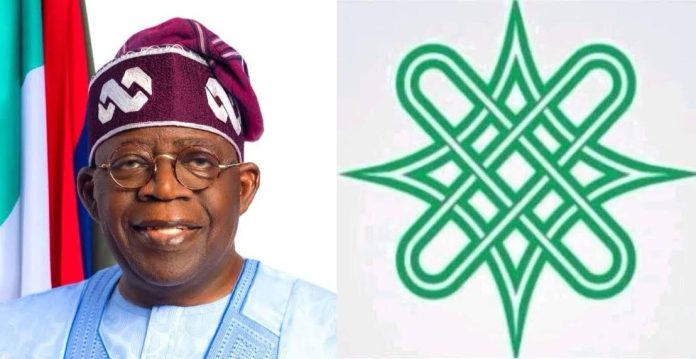

The attention of the Progressive Alliance for Justice, Unity and Democracy International Movement (PAJUD-IM) has been drawn to a growing campaign of misinformation and political propaganda in certain quarters seeking to portray President Bola Ahmed Tinubu as a leader who harbours bias against Northern Nigeria and its people.
These allegations are not only unfounded but also constitute a deliberate attempt to distort facts, mislead the public, and create unnecessary divisions among Nigerians. Such narratives deserve to be examined against the backdrop of reality rather than political sentiments.
It is indeed remarkable that President Tinubu, who was once criticized in some sections of the South-West for allegedly maintaining close political relationships with Northern leaders and stakeholders, is now being accused by some Northern political actors of favouring the South-West at the expense of the North. This contradiction exposes the weakness and inconsistency of the arguments being advanced by those determined to politicize every action and policy of government.
Before his emergence as President, Bola Ahmed Tinubu was repeatedly accused by certain ethnic and regional groups of placing national interest above sectional considerations. Some critics within his own region questioned his political alliances and engagements across the country, arguing that he was too accommodating of interests outside the South-West. Today, the same individual is being painted by another group as anti-North. Such conflicting accusations should encourage fair-minded Nigerians to separate political rhetoric from objective reality.
Nigeria is a diverse nation with over 250 ethnic groups and multiple religious identities. Governing such a country requires balance, courage, wisdom, and an unwavering commitment to national unity. No President can successfully govern Nigeria if every appointment, project, policy, or decision is viewed exclusively through ethnic, religious, or regional lenses.
Since assuming office, President Tinubu has consistently emphasized the principle that every Nigerian deserves equal treatment under the law and equal access to opportunities provided by the government. His administration has pursued policies designed to stabilize the economy, improve infrastructure, strengthen security, enhance investment opportunities, and create a more sustainable future for all Nigerians irrespective of where they come from.
While no administration is perfect and constructive criticism remains an essential component of democracy, it is important that such criticism be based on facts rather than emotions, propaganda, or political calculations. The tendency to label every policy decision as either pro-North or pro-South undermines the spirit of nation-building and weakens the foundations of national unity.
Particularly noteworthy are the efforts of the Tinubu administration in addressing security challenges that have affected various parts of the country for many years. For nearly two decades, insecurity in the form of terrorism, banditry, kidnapping, communal conflicts, and other criminal activities has posed serious threats to lives and livelihoods, especially in Northern Nigeria.
Although the security challenge remains a work in progress, there have been significant efforts by the Federal Government to strengthen the operational capacity of security agencies, improve intelligence gathering, enhance collaboration among security institutions, and support ongoing military operations aimed at restoring peace and stability across affected communities.
These efforts have not gone unnoticed. Security experts, members of the international community, traditional rulers, community leaders, and concerned citizens have acknowledged the commitment of the present administration to tackling insecurity and creating conditions for sustainable peace and development.
In recent times, a narrative has gained traction in some political circles suggesting that President Bola Ahmed Tinubu harbors ill feelings toward Northern Nigeria or has deliberately neglected the region in governance and development. Such claims, when subjected to objective scrutiny, reveal themselves as products of political mischief, selective reasoning, and deliberate attempts to sow division among Nigerians.
One cannot help but marvel at the contradictory accusations that have followed President Tinubu throughout his political journey. At one point, he was accused by some southern critics of being too close to the North, so much so that they labeled him a political ally and beneficiary of Northern interests. Today, however, some voices in the North accuse the same man of favoring the South-West and abandoning the North. The contradiction itself exposes the weakness of these allegations and demonstrates how political narratives are often shaped more by expediency than by facts.
President Tinubu’s political philosophy has, over the decades, reflected a commitment to national integration rather than regional supremacy. His political alliances, appointments, and engagements have consistently cut across ethnic, religious, and regional lines. Long before becoming President, Tinubu built relationships and political structures that transcended geographical boundaries, earning him allies and supporters in every part of the federation.
It is important to note that governance should not be assessed through the narrow prism of ethnicity or regional sentiment. The true measure of leadership lies in policies, programs, and initiatives designed to improve the lives of citizens irrespective of where they come from.
Since assuming office, President Tinubu has inherited daunting economic challenges, security concerns, infrastructure deficits, and fiscal constraints that affect every region of the country. The administration’s efforts have therefore been directed toward stabilizing the economy, attracting investment, creating jobs, improving security, and laying a sustainable foundation for long-term national growth.
The North remains one of the greatest beneficiaries of federal interventions in agriculture, transportation, road infrastructure, security operations, and social investment programs. Major infrastructure projects traversing Northern states continue to receive attention and funding. Security operations against banditry, terrorism, kidnapping, and other criminal activities have equally been intensified in many parts of Northern Nigeria. These are not the actions of a government that harbors hostility toward a particular region.
Furthermore, appointments into strategic positions within the current administration have reflected Nigeria’s federal character principle. Distinguished sons and daughters of the North continue to occupy important positions in government, contributing significantly to policy formulation and national development. While no administration can satisfy every interest group, it would be unfair and misleading to suggest that any region has been deliberately sidelined.
The challenge facing Nigeria today is not a North-South divide but the collective responsibility of rebuilding a nation confronted by complex socio-economic realities. Attempts to ethnicise governance or regionalize every policy decision only distract from meaningful conversations about development, accountability, and national progress.
History teaches us that nations prosper when their citizens embrace unity, mutual respect, and shared aspirations. Conversely, societies become weakened when political actors exploit ethnic and regional sentiments for personal or partisan gain. Nigerians must therefore resist efforts to create unnecessary divisions where none exist.
President Tinubu, like every leader, is not beyond criticism. Constructive criticism is an essential component of democracy and good governance. However, criticism should be based on facts, policy outcomes, and measurable performance rather than unfounded allegations rooted in ethnic or regional prejudice.
It is on record, with empirical evidence that the present Tinubu’ administration has a seamless relationship with the northern elites and oligarchs dating back to several years; the president has also built long-standing bridges with the northern traditional rulers, institutions, clergies and local community leaders; while since taking over the mantle of leadership, the administration has effortlessly transformed and built several infrastructures more than any Nigerian leader in the region. Our organisation (PAJUD- IM) can authoritatively state, that the Tinubu administration has continued to build on the legacies of the founding fathers such as Sir Ahmadu Bello, Sir Abubakar Tafawa Balewa, Muhammadu Ribadu, Sir Kashim Ibrahim, Alh Ibrahim Musa Gashua, HRH Usman Nagogo, and Mallam Aminu Kano. The President has endeared and entrenched himself to the political class, traditional institutions including the Talakawas in spite of the handwork of fifth columnists and agents provocateurs. All our military institutions, installation and architecture including infrastructure has been enhanced, developed and a lot more established in the region and of course, the present administration has developed the North than any other region in the country since independence this can be verified by Nigerians as at today.
At this critical stage of our national development, Nigerians must rise above sectional considerations and evaluate leadership based on competence, vision, and commitment to the collective good. The task before the nation is too important to be reduced to divisive narratives that serve neither the North, the South, nor the country as a whole.
The question therefore remains: Does President Tinubu really hate the North? An objective assessment of his political history, governance approach, appointments, and policy initiatives suggests otherwise. What is evident is a leader confronted with enormous national challenges and striving, within the limits of available resources, to address them for the benefit of all Nigerians.
Rather than amplifying narratives of division, Nigerians should unite in support of policies and initiatives that promote peace, economic prosperity, security, and national cohesion. Our strength as a nation lies not in our differences but in our ability to work together toward a common destiny. Long live Nigeria.
Signed.
Com Yakubu Dan Abba
Country Representative, PAJUD.