


The recent account by human rights activist Omoyele Sowore of his experience in the Kuje Correctional Centre, Abuja, is a sobering reminder that many people behind bars may have found their way there not because they were found guilty of any crime. Investigations revealed that many of them were imprisoned because Nigeria’s criminal justice system has become a convenient instrument for political repression, personal vendetta, abuse of police powers, and the denial of justice.
Sowore’s experience was not simply about his own incarceration. It exposed the stories of many others trapped in a system where detention has become punishment long before conviction.
He recounted meeting Haruna Garba Gololo, reportedly sent to prison following a case involving Senate President Godswill Akpabio. Although Gololo had been granted bail, he remained in prison for weeks because he could not satisfy the bail conditions.
He also met David Nwokorie, who was allegedly arrested by the Nigeria Police after a failed relationship with the daughter of a retired Deputy Inspector General of Police. After spending nearly four months in prison, he was granted bail only on conditions requiring a Level 16 civil servant and a Nigerian Army colonel as sureties—conditions that are beyond the reach of the overwhelming majority of Nigerians.
Then there is the irony of the Minister of Interior, Dr. Olubunmi Tunji-Ojo, publicly lamenting that about 93 percent of inmates in Nigeria’s correctional centres are awaiting trial, while a critic, Emorioloye Owolemi, reportedly spent months in prison after being prosecuted over alleged cyberstalking.
Sowore himself was imprisoned by the Federal Government under President Bola Tinubu. Irrespective of one’s opinion of Sowore’s kind of politics, his experience demonstrates how easily criminal law can be weaponized against critics and how pre-trial detention has become an instrument of punishment rather than a measure of last resort.
Sowore in his narrative revealed that Kuje Correctional Centre holds 1,115 inmates, of whom 817 are awaiting trial. Forty-seven are reportedly suffering from tuberculosis. These figures should shock every Nigerian. They expose not merely prison congestion but a justice system in distress.
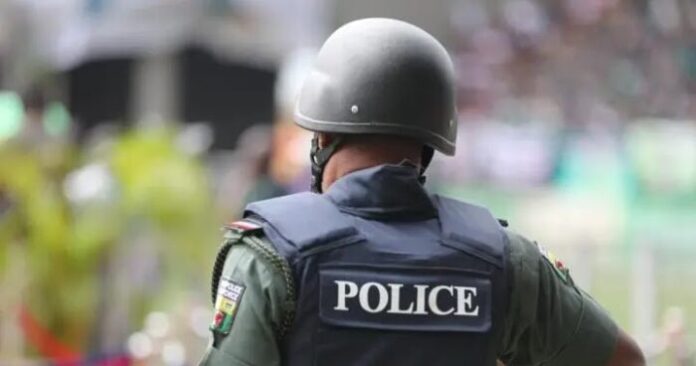
The tragedy, however, begins long before anyone enters the prison. It starts in the police custody preceded by arbitrary arrests, prolonged detention, torture, denial of access to lawyers and family members, extortion, fabricated evidence, and the manipulation of criminal investigations to satisfy influential complainants or silence perceived opponents.
Many detainees spend weeks or months in police cells before they are taken to court. Others are hurriedly arraigned on weak or concocted charges simply to secure a remand order that legitimizes unlawful detention. Once remanded, they disappear into the ever-growing population of awaiting-trial inmates.
This is how police abuse feeds prison congestion. And this is how political repression fills correctional centres. This is how poverty becomes criminalised.
For wealthy or politically connected suspects, arrest often leads to immediate bail and vigorous legal representation. For ordinary Nigerians, arrest frequently marks the beginning of an ordeal that can last months or years, regardless of guilt or innocence. Justice becomes a privilege reserved for those with influence, while detention becomes the fate of those without it.
The consequences extend beyond the prison walls. Families lose breadwinners. Businesses collapse. Children drop out of school. Victims suffer trauma and stigma even when eventually discharged or acquitted. Many emerge from prison physically ill, psychologically damaged, and economically ruined for offences they may never have committed.
This is not merely a human rights crisis. It is a rule of law crisis.
The Constitution guarantees personal liberty and presumes every accused person innocent until proven guilty. Those guarantees become meaningless when the police abuse arrest powers, prosecutors pursue frivolous cases, courts impose impossible bail conditions, and correctional centres become warehouses for legally innocent citizens.
The solution does not lie simply in building more prisons or periodically releasing inmates. Those measures merely treat the symptoms.
Nigeria must address the source of the problem.
Police officers who engage in arbitrary arrests, torture, extortion, or prolonged unlawful detention must be held personally accountable. Investigations must be evidence-driven rather than dictated by political influence or private interests. Prosecutors must reject cases that lack merit. Courts must ensure that bail conditions are reasonable, affordable, and consistent with the constitutional presumption of innocence. Legal aid and oversight mechanisms must be strengthened so that poverty no longer determines who remains behind bars.
Most importantly, governments must stop using the criminal justice system to intimidate critics, settle political scores, or protect the interests of the powerful.
The measure of a democracy is not how it treats the influential but how it protects the rights of the ordinary citizen. A state that routinely imprisons people before proving their guilt ceases to uphold the rule of law; it begins to govern through fear.
Sowore’s account should therefore not be dismissed as another political controversy. It is a warning. Behind every statistic on prison congestion is a human being whose liberty may have been taken not by justice, but by the abuse of power.
Until Nigeria reforms policing, curbs political interference in law enforcement, and restores constitutional safeguards throughout the criminal justice process, our prisons will remain crowded—not only with suspected offenders, but with victims of a system that too often mistakes power for justice.
QUOTE
Sowore in his narrative revealed that Kuje Correctional Centre holds 1,115 inmates, of whom 817 are awaiting trial. Forty-seven are reportedly suffering from tuberculosis. These figures should shock every Nigerian. They expose not merely prison congestion but a justice system in distress.