


By Itopa Yakubu
The development is due to NNPCL funding of the activities of the refineries even when they were poorly functional and making losses.
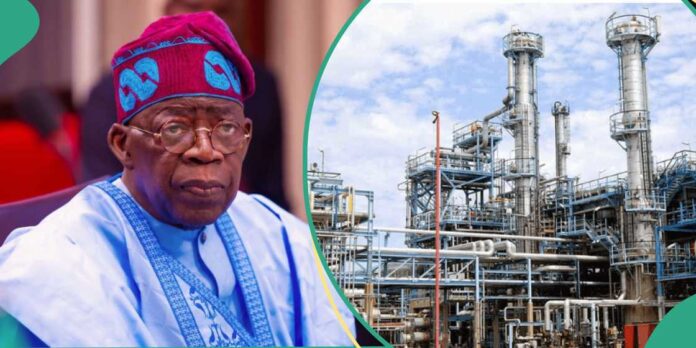
A review of financial documents shows shown that three refinery companies, Kaduna Refinery Company, Port Harcourt Refinery Company and Warri Refinery and Petro-Chemical Company accumulated debts up to hundreds of billions owed to the Nigerian National Petroleum Company Limited (NNPCL) between 2020 and 2021.
The development is due to NNPCL funding of the activities of the refineries even when they were poorly functional and making losses.
The companies also have a abysmally poor record of loss making, which may explain why it relies on the NNPCL to fund its operations and in return amass huge debts.
Available documents show that in 2020, PortHarcourt refinery and Petrochemicals Company owed N438 billion and owed N476 billion in 2021.
Kaduna Refinery and Petrochemicals Company owed N502 billion in 2020 and N558 billion in 2020.
Warri Refinery and Petrochemicals company owed N378 billion in 2020 and N415 billion in 2021.
This indebtedness to the NNPC may not be surprising given their history of making losses, due to paucity of revenue.
In 2015, Kaduna State refinery revenue stood at N21 million while the expenditure for the year stood at N18.6 billion.
In the same year Port Harcourt refinery recorded N215 million while the expenditure for the year was N12.2 billion.
Warri refinery revenue stood at N45 million while the expenditure for the year stood at N15.5 billion.
In 2016, Kaduna refinery and petrochemical company made a revenue of N208 million but spent N31.9 billion. The PortHarcourt refinery made N807 million but spent N28.2 billion in same period.
Warri refinery total revenue in 2016 stood at N89 million while the company spent N18.7 billion in the same period.
In 2017, Kaduna Refinery and Petrochemical company posted a revenue of N109 billion but made expenditure of N141 billion.
Warri refinery made N89 billion but made expenditure of N111 billion.
Despite the fundings poured into the refining companies by the NNPC, they have continued to remain non-functional.
Nigerians have continued to lament as Africa’s most populous country blessed with crude oil struggles with refining its own petroleum, and is instead relying on importation which has driven up energy resources