

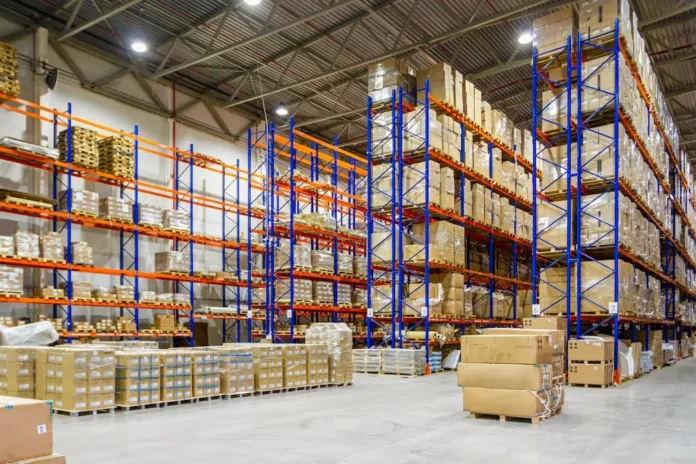

Nigerian manufacturers’ inventory of unsold completed goods increased by 357.57% to N1.24 trillion in the second half of 2024 (H1’24) from N271 billion in the same period last year (H1’23) due to consumers’ decreased purchasing power.
This was revealed in the Manufacturers Association of Nigeria’s (MAN) H1’24 Economic Review, which was made public yesterday.
This occurred as the Nigeria Employers’ Consultative Association, or NECA, issued a warning that failure to address the root causes of these issues may result in a new wave of company closures, more unemployment, and increased social dysfunction.
According to the Association of Small Business Owners of Nigeria, or ASBON, the lifting of the import prohibition caused a significant influx of foreign goods into the Nigerian market, making domestically produced goods less competitive.
According to the report, MAN blamed the “alarming increase” on the devaluation of the naira, rising inflation, and the withdrawal of subsidies for the decline in consumer purchasing power.
“In H1 2024, the manufacturing sector’s inventory of unsold completed goods increased by 357.57% year over year to N1.24 trillion.
“The high levels of unsold inventories reflect the difficulties consumers face and the need for interventions to boost demand and enhance the performance of the sector,” the statement said.
The report also bemoaned the fact that the cost of electricity for manufacturers had increased dramatically due to the DisCos’ more than 200 percent increase in electricity bills.
MAN claims that this, together with continuous power outages, put more financial burden on the industry and compelled them to look for pricey alternative power sources.
Manufacturers spent N238.31 billion on alternative energy sources in H1 2024, a 7.69% increase from H2 2023, demonstrating the ongoing rise in the expense of delivering alternative power.
Higher prices for gas, diesel, and other energy sources, as well as the requirement for industries to make investments in self-energy generation because of the national grid’s unstable power supply, were the main causes of the cost increase, the research continued.
However, MAN observed that the sector’s capacity utilization increased by 2.8 percentage points to H1’24 from H2’23, indicating some recovery.
The depreciation of the naira, which increased the cost of importing machinery and other necessary assets, was the primary cause of the 29.63% year-over-year increase in investment in the manufacturing sector, which reached N250.13 billion in H1’24, according to MAN.
“H1’24 was marked by significant challenges for Nigeria’s manufacturing sector, including high operational costs, declining consumer demand, and rising inflation,” stated Segun Ajayi-Kadir, Director-General of MAN, in response to the report. Some industries battled with falling production values, growing stockpiles, and decreased employment, while others demonstrated growth and resilience.
The research emphasizes how urgently Nigeria must adopt firm and coherent economic reforms to address these challenges.”