


Israel is threatening to seize ancient water reservoirs near Bethlehem, in what would be a significant escalation in an intensifying campaign for control of West Bank land and the Middle East’s historical narrative.
Since Israel’s extremist finance minister, Bezalel Smotrich, made an explicit threat in May to “erase” the agreements that confirmed Palestinian ownership of Solomon’s Pools more than 30 years ago, Israeli settlers and troops have stepped up their presence around the spectacular site.
As reported by The Guardian, the pools date back as far as the second century BCE, though the main construction was carried out by the Romans a century later as part of a vast engineering project of two reservoirs, aqueducts and tunnels to supply water to Jerusalem 8 miles (13km) away.
A third monumental basin was added under Ottoman rule, when a fort was also built to safeguard the water supply. During the Mandate period from 1923 to 1948, the British authorities modernised the system with metal pipes and pumps.
The pale stone Mandate-era pumping station now stands abandoned in the wooded hills of the area and the pools, more than 10 metres deep in places, no longer funnel water to Jerusalem, but have become the main source of recreation in the area.
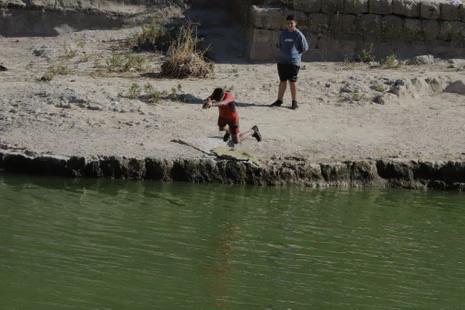
On a recent afternoon, children from the neighbouring villages of Artas and al-Khader took running jumps off the stone walls of the middle pool into the deep green water, while a handful of men fished amid the reeds off the ramparts on the other side.
On Fridays and holidays, families come from Bethlehem, 2 miles (3.5km) to the north-east, to spend the evening, bathe and picnic. As the city has become hemmed in by new settlements on all sides, the pools are increasingly a sanctuary for Bethlehemites.
“It’s the only place now in all Bethlehem that you can find somewhere to sit and to enjoy the water, the shade, the green space – and now they are trying to steal it,” said Mahmoud Jaber, a local activist and horticulturist from Artas, who uses water from the local springs to grow vegetables.