
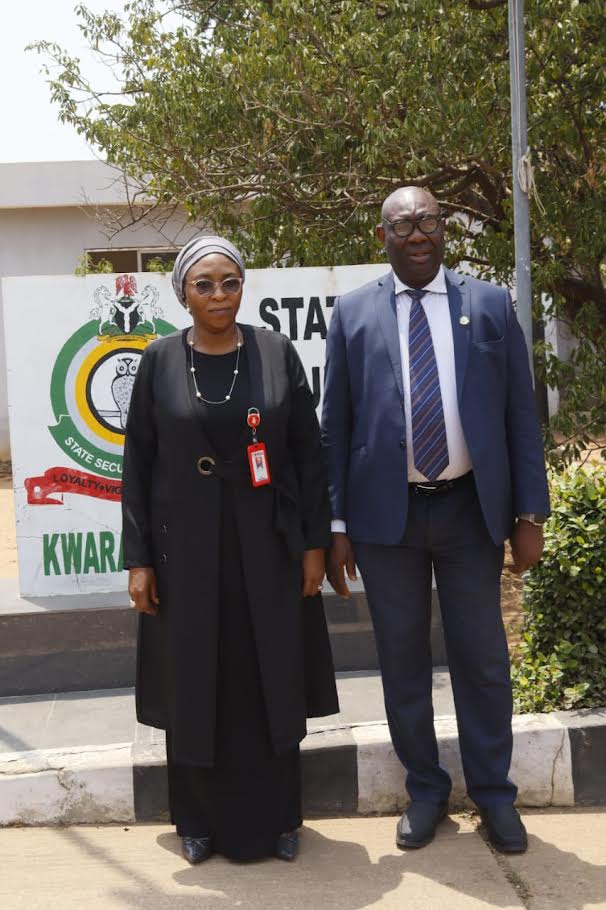

The new Zonal Director of the Economic and Financial Crimes Commission, EFCC, Ilorin Zonal Directorate, Assistant Commander of the EFCC, ACE I Victoria Ugo-Ali, on Tuesday, March 3, 2026, embarked on strategic courtesy visits to the Commandant of the 22 Armoured Brigade, Nicholas Rume, and the Kwara State Director of the Department of State Services, DSS, Michael Oganwu, in Ilorin.

The visits were aimed at strengthening inter-agency collaboration to combat corruption, illegal mining, banditry, and terrorism financing in Kwara State and its environs.
During her meeting with the Army Commandant, Ugo-Ali emphasized the urgent need for coordinated efforts to address illegal mining, describing it as a major threat to Nigeria’s economic stability and national security. She noted that illicit mining operations are often driven by organized criminal networks that evade regulatory controls and deprive the nation of critical revenue. She called for enhanced intelligence sharing, joint field operations, and improved protection of mining sites to curb the menace.

The Zonal Director further highlighted the nexus between illegal mining and terrorism financing, explaining that proceeds from unlawful mineral extraction are sometimes channeled into funding violent and extremist activities. She stressed that disrupting such financial flows remains central to the EFCC’s mandate and requires robust military collaboration to dismantle entrenched criminal structures.
In his response, Brigadier General Rume commended the EFCC’s proactive approach and reaffirmed the Brigade’s readiness to support anti-corruption and economic crime initiatives within its operational jurisdiction. He pledged continued cooperation through joint task operations, timely intelligence exchange, and coordinated capacity-building programmes to enhance operational efficiency and curb economic sabotage.
At the DSS Office, Ugo-Ali underscored the importance of intelligence-driven collaboration in tackling corruption, economic crimes, and the growing threat of banditry in parts of Kwara and neighbouring states. She observed that corruption and illicit financial activities often serve as enablers of insecurity, providing funding streams for bandit groups and extremist elements. According to her, cutting off these financial lifelines through joint investigations and strategic enforcement would significantly weaken criminal networks.
Responding, Oganwu assured the EFCC of the DSS’s unwavering support, noting that the fight against corruption, banditry, and terrorism financing demands a united front among security agencies.
He pledged actionable intelligence and strategic collaboration to ensure effective enforcement and sustainable peace.