


By Hosea Parah
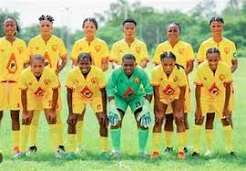
Following the decision of the Confederation of Africa Football (CAF) on Edo Queens, Nigerian football stakeholders, on Tuesday, called on CAF and WAFU B to tread with caution so as not to destroy African football.
John Imade, owner of an Abuja-based football academy, strongly condemned CAF politics in football, and advised the African football governing body to tread with fear of God.
”Our Nation’s Cup has no value because of the same nonsense they did to Senegal. Now, they want to play the same politics with Edo Queens. Absolute nonsense. This CAF, if care is not taken, they will kill African football,” Imade said.
Meanwhile, in their reply to CAF, the Nigeria Football Federation (NFF) said, “The fact that Edo Queens did not elect, request, or cause the penalty shoot-out, but merely participated in the procedure directed by the match official.
”The outcome of the final match should stand. The absence of any finding of misconduct, manipulation, bad faith, or regulatory breach against Edo Queens; the need for the Committee to distinguish between correcting an irregularity, and allocating the consequences of that irregularity to an innocent participant; the requirement that any remedy adopted must have a clear regulatory foundation, and must be proportionate to the irregularity established; and the potential unfairness arising from directing the continuation under conditions which may materially alter the competitive circumstances in which the match was originally concluded.
”The Committee, therefore, acted unfairly by holding Edo Queens responsible for a referee’s administrative error. Edo Queens is an innocent club. It should be strongly emphasised in the appeal that the penalty shoot-out was not the product of a tactical decision by Edo Queens. Also, that Edo Queens did not request that extra time be dispensed with. Edo Queens did not refuse to play extra time or insist on penalties. Edo Queens did not misrepresent the Regulations to the referee or otherwise induce the referee to depart from Article 72.4. Rather, once the referee directed the teams to proceed to penalties, Edo Queens complied. The fact that Edo Queens ultimately won the shoot-out cannot retrospectively convert its compliance with the referee’s instruction into responsibility for the regulatory breach. There is an important distinction between benefiting from an official’s error and causing or procuring the error.
”The Committee has made no finding that Edo Queens caused or procured the error. It is therefore difficult to justify a remedy which effectively removes the sporting consequence of the penalty shoot-out from Edo Queens where the club was not responsible for the circumstances which produced it.
”Whether the committee had power to annul the penalty shoot-out:
”It is our submission that there is a distinction between the Committee’s power to identify an irregularity and its power to impose a particular remedy. We accept that Article 4 gives the relevant Organising Committee responsibility for applying the Regulations, determining complaints and homologating match results. The Committee was therefore competent to consider whether the penalty shoot-out complied with Article 72.4. However, the existence of jurisdiction to determine a complaint does not necessarily mean that every conceivable remedy is available. A sports governing body, like any regulatory body, must exercise its powers within the four corners of its governing instruments.
”The critical question for appeal is therefore: ‘What specific provision of the Regulations authorises the Committee, in circumstances where neither team caused the irregularity, to annul the result of a penalty shoot-out and require the match to resume thirty minutes later?” ‘
”The more compelling case lies elsewhere. The Committee has expressly found that the failure to play extra time was caused by an erroneous administrative instruction and that the omission was not caused by either participating club. It has also found that the referee acted in good faith. On those findings, Edo Queens was an innocent participant which merely complied with the match official’s direction. Against that factual background, the Committee ought to have afforded Edo Queens a meaningful opportunity to be heard before deciding to annul the penalty shoot-out and alter.”