


BY AHMED AKANBI
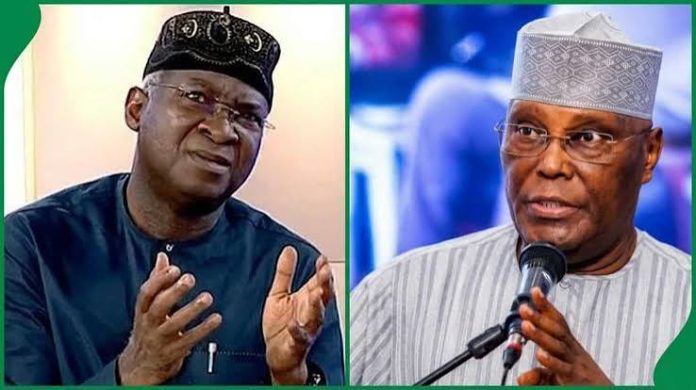
Former Lagos State Governor, Babatunde Fashola, has told former Vice-President Atiku Abubakar to explain how he will pay for his plan to bring back fuel subsidy if elected in 2027.
Fashola said the proposal is unrealistic because Atiku has not addressed Nigeria’s crude oil production crisis and the struggle of local refineries to get enough crude.
Speaking on a national television politics programme, he questioned how subsidy could return without a clear plan for where the money and crude would come from.
The former Minister of Works and Housing, noted that Nigeria is still failing to meet its oil production quota, while insecurity and vandalism continue to disrupt oil-producing communities.
“If we have refineries working, what is our current oil quota? Are we optimising it yet? No, because they are legacy issues, challenges with security people, vandalism. So where is this magic crude oil going to come from? People are entitled to ask,” Fashola said.
He insisted Atiku must prove the plan is workable, not just use it to win votes.
“If he can explain, good, let the people choose. But without proof, it is like abracadabra,” he said.
Fashola said his criticism was about policy, not personality, stressing that “The proposal is not realistic. I am looking at the proposal, not the personality.”
He also reminded Nigerians that Atiku supported subsidy removal in the 2023 campaign, and asked what had changed to make a return sustainable now.
Fashola argued that restoring subsidy would need the National Assembly to amend existing laws, and doubted lawmakers would back a policy that would slash government revenue.
Drawing from his experience in former President Muhammadu Buhari’s government, he said subsidy payments starved states of funds.
“I was in a government that was paying subsidy, and the states were not getting money, so are we going to go back to partial, near-zero returns, states borrowing money to pay salaries? Is that where you want us to go?” he asked.
Atiku had in August 2026 promised a temporary, audited subsidy on locally refined petroleum products to cut fuel and transport costs and ease hardship on households.
President Bola Tinubu removed fuel subsidy on May 29, 2023, during his inauguration, as part of his economic reforms.