

By Olayinka Olatunbosun, PhD
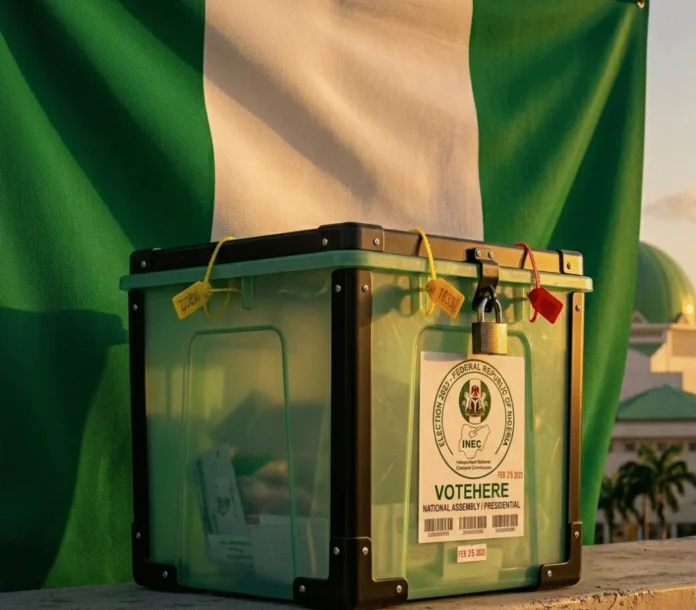
As Nigeria gradually approaches the 2027 General Election, one question is increasingly dominating political discussions across the country: Can the Independent National Electoral Commission (INEC) be trusted to conduct a free, fair, credible, and transparent election?
This question is not merely political; it is fundamental to the survival of our democracy. The credibility of any democratic system rests largely on the integrity of its electoral process. Where elections are credible, citizens develop confidence in government. Where elections are manipulated, public trust erodes, political tension rises, and democracy becomes endangered.
Nigeria’s democratic journey since 1999 has witnessed significant improvements as well as major setbacks. While some elections have been adjudged relatively credible, others have generated controversies that continue to haunt the nation’s political landscape.
Consequently, the burden rests heavily on INEC to prove beyond reasonable doubt that it remains an impartial umpire capable of delivering elections that truly reflect the will of the people.
THE BURDEN OF HISTORY
INEC’s credibility has been tested repeatedly over the years. From allegations of voter suppression and logistical failures to accusations of result manipulation and technological inconsistencies, the Commission has faced numerous challenges.
The 2023 General Election particularly raised serious concerns among many Nigerians. Despite assurances regarding the deployment of technology, including the Bimodal Voter Accreditation System (BVAS) and the INEC Result Viewing Portal (IReV), controversies surrounding the transmission and management of election results generated widespread public debate.
Many Nigerians felt disappointed because expectations were high. Citizens had hoped that technology would eliminate the traditional challenges associated with electoral fraud. Unfortunately, the controversies that followed left many questioning whether technological innovations alone can guarantee electoral credibility.
As 2027 approaches, INEC must recognize that public confidence cannot be demanded; it must be earned.
WHY TRUST MATTERS
Trust is the currency of democracy.
When citizens trust electoral institutions, they willingly participate in elections. They accept election outcomes, even when their preferred candidates lose. However, when trust disappears, voter apathy increases, political violence becomes more likely, and democratic institutions suffer.
One of the greatest threats to Nigeria’s democracy today is not merely electoral malpractice but the growing perception among some citizens that their votes may not count. Such perceptions, whether real or imagined, weaken democratic participation.
The challenge before INEC is therefore not only to conduct elections but also to convince Nigerians that every vote will count and every vote will matter.
THE INDEPENDENCE QUESTION
One of the recurring concerns about INEC is the issue of independence.
Although the Commission is constitutionally established as an independent body, many Nigerians still question whether it is sufficiently insulated from political influence. The process of appointing key electoral officials often fuels public suspicion.
For democracy to flourish, electoral institutions must not only be independent; they must be seen to be independent. Public perception matters greatly.
Nigeria may need to revisit conversations around broader stakeholder involvement in the appointment of electoral commissioners and key officials. Transparency in appointments can significantly improve public confidence.
TECHNOLOGY IS NOT ENOUGH
Technology remains an important tool for electoral integrity, but technology alone cannot solve institutional weaknesses.
Electronic accreditation, digital result transmission, and online result viewing systems are commendable innovations. However, technology is only as reliable as the human beings who operate it.
Integrity, transparency, accountability, and competence remain indispensable ingredients of credible elections.
INEC must therefore continue to strengthen its technological infrastructure while simultaneously improving staff training, operational efficiency, and ethical standards.
THE CHALLENGE OF VOTE BUYING
One of the greatest threats to Nigerian democracy is vote buying.
Sadly, elections in some parts of the country have become transactional exercises where votes are exchanged for money, food items, or other inducements. This dangerous trend undermines democratic values and weakens governance.
INEC cannot fight this menace alone. Political parties, security agencies, religious institutions, civil society organizations, traditional rulers, and citizens must all play their respective roles.
The future of Nigeria cannot be auctioned to the highest bidder.
THE ROLE OF POLITICAL PARTIES
While INEC often receives the bulk of public criticism, political parties must also accept responsibility.
Internal party democracy remains weak in many political parties. Candidate selection processes are frequently characterized by imposition, manipulation, and exclusion.
Political parties that fail to conduct credible primaries should not expect credible general elections.
Democracy begins within political parties before it manifests at the national level.
THE RESPONSIBILITY OF NIGERIANS
As citizens, we also have responsibilities.
We cannot demand credible elections while simultaneously engaging in electoral misconduct. We cannot condemn corruption in government while participating in vote buying and vote selling.
Democracy thrives when citizens are vigilant, informed, and committed to national interest above personal gain.
The quality of leadership we produce often reflects the quality of citizenship we practice.
LESSONS FROM SCRIPTURE
The Bible teaches that righteousness exalts a nation, but sin is a reproach to any people (Proverbs 14:34).
God is a God of justice, fairness, and truth. Any system built on deception, manipulation, and injustice cannot enjoy lasting peace.
The prophet Amos declared, “Let justice roll down like waters, and righteousness like an ever-flowing stream” (Amos 5:24).
These timeless principles apply equally to governance and elections. Electoral integrity is not merely a political issue; it is a moral issue.
WHAT INEC MUST DO BEFORE 2027
To strengthen public confidence ahead of the 2027 General Election, INEC should:
Improve transparency in all electoral processes.
Ensure timely and reliable deployment of technology.
Conduct extensive voter education programmes.
Strengthen training and monitoring of electoral personnel.
Collaborate effectively with security agencies.
Guarantee prompt and transparent communication with the public.
Address logistical shortcomings experienced in previous elections.
Enforce strict accountability for electoral misconduct.
CONCLUSION
Can INEC be trusted?
The answer ultimately depends on what INEC does between now and 2027.
Trust cannot be built through promises alone. It must be earned through consistency, transparency, accountability, competence, and fairness.
Nigeria’s democracy is too important to fail.
The 2027 General Election presents another opportunity for INEC to strengthen public confidence and demonstrate its commitment to electoral integrity.
As citizens, we must remain hopeful yet vigilant. As leaders, we must promote justice and fairness. As a nation, we must insist that the sanctity of the ballot box be preserved.
The future of Nigeria depends not merely on who wins elections but on whether Nigerians genuinely believe that those elections were won fairly.
The time to build trust is now.
Dr.Olayinka Dipo Olatunbosun is a public affairs commentator, leadership consultant, author, and minister of the Gospel.