

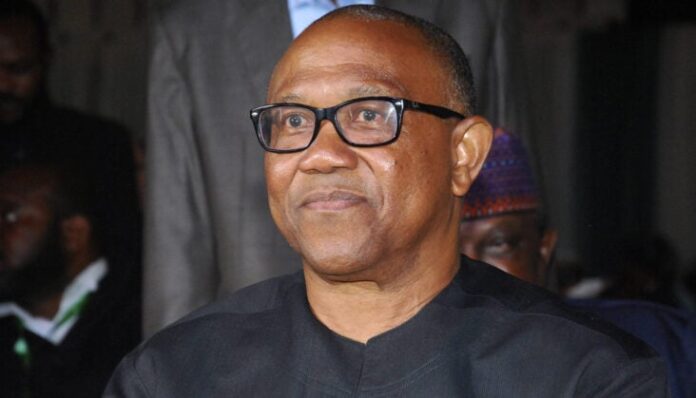

Indications are strong that former Labour Party presidential candidate, Peter Obi, may formally exit the party this week, marking a major turning point in Nigeria’s opposition politics following months of unresolved leadership turmoil within the party.
Sources familiar with the situation say Obi’s expected departure is tied to the prolonged instability that has plagued the Labour Party since the 2023 general elections.
Despite its historic electoral breakthrough during that cycle, the party has struggled to stabilise its internal structures, becoming mired in factional disputes, court cases and competing claims to leadership.
At the centre of the crisis is the controversy over the tenure of former National Chairman, Julius Abure. Obi and several party stakeholders have consistently argued that a Supreme Court ruling effectively ended Abure’s leadership.
However, the continued recognition of Abure’s faction by the Independent National Electoral Commission (INEC) has sustained the impasse, leaving the party operating with parallel executives and rival camps.
Insiders say Obi has grown increasingly uncomfortable with the situation, believing that his continued presence in the party has inadvertently worsened internal tensions.
According to them, rival factions have repeatedly invoked his name and popularity to bolster their competing claims, dragging him into a struggle he neither controls nor benefits from.
While Obi’s next political destination remains uncertain, multiple opposition parties are said to be courting him. Discussions, however, are described as fluid, with no final agreement reached.
Although the African Democratic Congress (ADC) has featured prominently in speculation, sources suggest it may not be his immediate destination due to unresolved internal arrangements and strategic differences.
Those close to Obi say he has raised concerns about internal democracy, leadership clarity and long-term direction in parties seeking his alignment. He is reportedly wary of joining platforms burdened by entrenched interests or pre-existing agreements that could constrain his political space ahead of 2027.
The Labour Party’s meteoric rise in 2023 was largely driven by Obi’s candidacy, which mobilised young voters, urban professionals and first-time participants under the “Obidient” movement.
However, that momentum has since ebbed, with several elected officials defecting amid complaints of confusion and lack of direction.
Obi is said to believe that stepping aside could give the party room to resolve its internal contradictions without his influence distorting the process. His exit, if confirmed, is expected to trigger fresh realignments across the opposition landscape, as parties position themselves to attract his supporters.
When contacted, ADC spokesman Bolaji Abdullahi said he could not confirm Obi’s possible defection but noted that the party would be open to welcoming him.
Efforts to reach Labour Party officials for comment were unsuccessful at the time of filing this report.